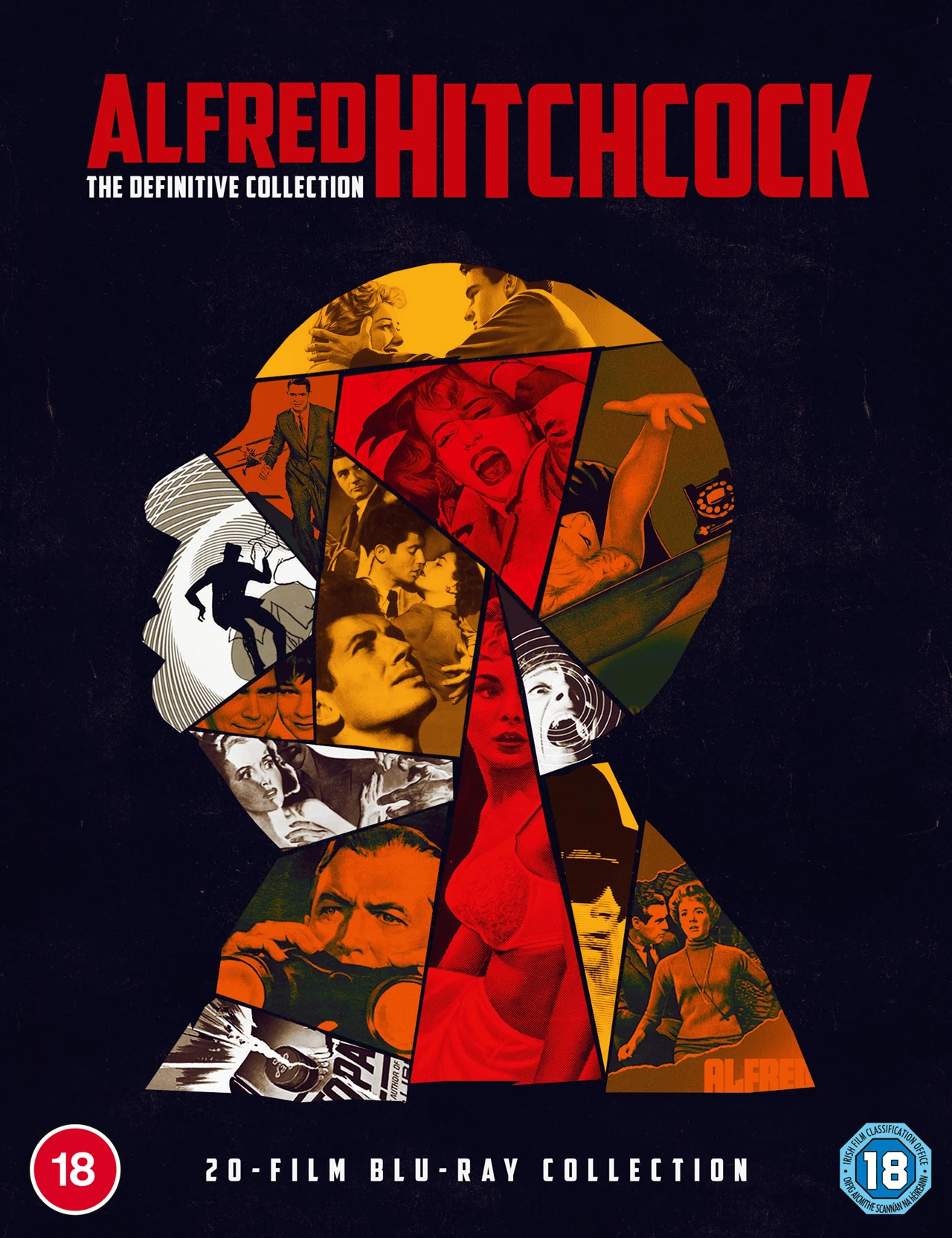
Alfred Hitchcock - Definitive Collection
Suspicion (1941) | Saboteur (1942) | Shadow of a Doubt (1943) | Rope (1948) | Strangers on a Train (1951) | I confess (1953) | Dial M for Murder (1954) | Rear Window (1954) | The Trouble with Harry (1955) | The Man who Knew too Much (1956) | The Wrong Man (1956) | Vertigo (1958) | North by Northwest (1959) | Psycho (1960) | The Birds (1963) | Marnie (1964) | Torn Curtain (1966) | Topaz (1969) | Frenzy (1972) | Family Plot (1976)
20 Movie Collection
| Genres: | |
| Themes: | |
| Persons: |
Suspicion (1941)
In Suspicion, Joan Fontaine (in an Oscar-winning role) and Cary Grant star in Alfred Hitchcock’s gripping psychological thriller about a young wife who comes to believe her charming husband may be plotting to kill her. A masterful portrait of paranoia, trust, and deceit.
Saboteur (1942)
A prototype of Hitchcock’s “wrong man” thrillers, Saboteur follows an innocent factory worker accused of sabotage during WWII. As he flees across America to clear his name, Hitchcock turns patriotic adventure into edge-of-your-seat suspense — culminating in a breathtaking Statue of Liberty finale.
Shadow of a Doubt (1943)
Often cited as Hitchcock’s personal favorite, Shadow of a Doubt contrasts small-town innocence with hidden evil. Teresa Wright suspects her beloved uncle (Joseph Cotten) may be a murderer, leading to one of cinema’s most haunting explorations of innocence and corruption.
Rope (1948)
Shot to appear as a single continuous take, Rope follows two intellectuals who commit murder for sport and hide the body during a dinner party. Alfred Hitchcock transforms the static setting into pure tension — a bold, claustrophobic psychological experiment on guilt and hubris.
Strangers on a Train (1951)
A sinister deal between two strangers spirals into deadly consequence when one fulfills his side of a “murder exchange.” Strangers on a Train showcases Hitchcock’s mastery of symmetry, obsession, and suspense — a chilling study in psychological manipulation.
I Confess (1953)
Set in Quebec, I Confess stars Montgomery Clift as a priest who learns of a murder during confession — and becomes the prime suspect himself. Alfred Hitchcock blends moral tension and Catholic guilt in a meditative thriller about duty, faith, and silence.
Dial M for Murder (1954)
A sleek chamber thriller, Dial M for Murder traps Grace Kelly and Ray Milland in a tale of deception and revenge. Hitchcock’s precision staging and meticulous pacing turn one apartment into a world of danger and calculation — a perfect execution of suspense.
Rear Window (1954)
Rear Window stars James Stewart as a confined photographer who suspects a neighbor of murder, watching through his lens as tension mounts. Alfred Hitchcock transforms voyeurism into art, making one courtyard the stage for suspense, guilt, and curiosity.
The Trouble with Harry (1955)
In rural Vermont, a group of locals discover a corpse — and can’t decide what to do about it. Alfred Hitchcock’s The Trouble with Harry is a darkly comic mystery of politeness, mortality, and absurdity, blending death with disarming charm.
The Man Who Knew Too Much (1956)
James Stewart and Doris Day star in this taut remake of Hitchcock’s 1934 film. When their son is kidnapped amid an assassination plot, parental fear collides with global intrigue in a suspense classic defined by precision and emotional depth.
The Wrong Man (1956)
Based on a true story, The Wrong Man follows Henry Fonda as a musician falsely accused of robbery. Alfred Hitchcock strips away glamour for documentary realism, crafting a stark, compassionate portrait of injustice and despair.
Vertigo (1958)
A hypnotic descent into obsession, Vertigo stars James Stewart as a detective ensnared by illusion and control while following a mysterious woman. Alfred Hitchcock’s magnum opus — a dreamlike blend of romance, death, and identity — remains one of cinema’s towering achievements.
North by Northwest (1959)
An advertising man (Cary Grant) is mistaken for a spy and pursued across America in Alfred Hitchcock’s quintessential chase thriller. From crop duster to Mount Rushmore, North by Northwest is stylish, witty, and relentlessly suspenseful — pure cinematic escapism.
Psycho (1960)
With its shocking plot twists and chilling atmosphere, Psycho redefined horror and the thriller genre. Anthony Perkins’s Norman Bates became immortal in film history — a haunting reflection of repression, madness, and Hitchcock’s most audacious storytelling.
The Birds (1963)
In The Birds, Tippi Hedren faces inexplicable avian attacks on a California coastal town. Alfred Hitchcock transforms nature into nightmare, delivering an apocalyptic allegory of chaos and human fragility.
Marnie (1964)
Tippi Hedren and Sean Connery star in Marnie, a psychologically charged thriller about a compulsive thief and her buried trauma. Alfred Hitchcock fuses romance and repression in one of his most provocative character studies.
Torn Curtain (1966)
Paul Newman and Julie Andrews headline Torn Curtain, a Cold War espionage drama where deception runs deep behind the Iron Curtain. Hitchcock crafts a slow-burning, cerebral thriller of divided loyalties and moral compromise.
Topaz (1969)
Topaz dives into Cold War intrigue, chronicling espionage between Cuba, France, and the U.S. Based on real-world tensions and spy tradecraft, Alfred Hitchcock delivers a precise, politically infused thriller of betrayal and global stakes.
Frenzy (1972)
Returning to London, Alfred Hitchcock delivers one of his darkest works: a tale of a serial “Necktie Murderer” and a man wrongly accused. Brutal and blackly comic, Frenzy confronts violence and voyeurism with unsettling intensity.
Family Plot (1976)
Hitchcock’s final film, Family Plot, interweaves a fake psychic and a cabbie with a pair of kidnappers in a playful web of deceit. A witty, light-hearted farewell from the master of suspense — blending crime, comedy, and irony into his last cinematic puzzle.
| Distributor | Warner Bros |