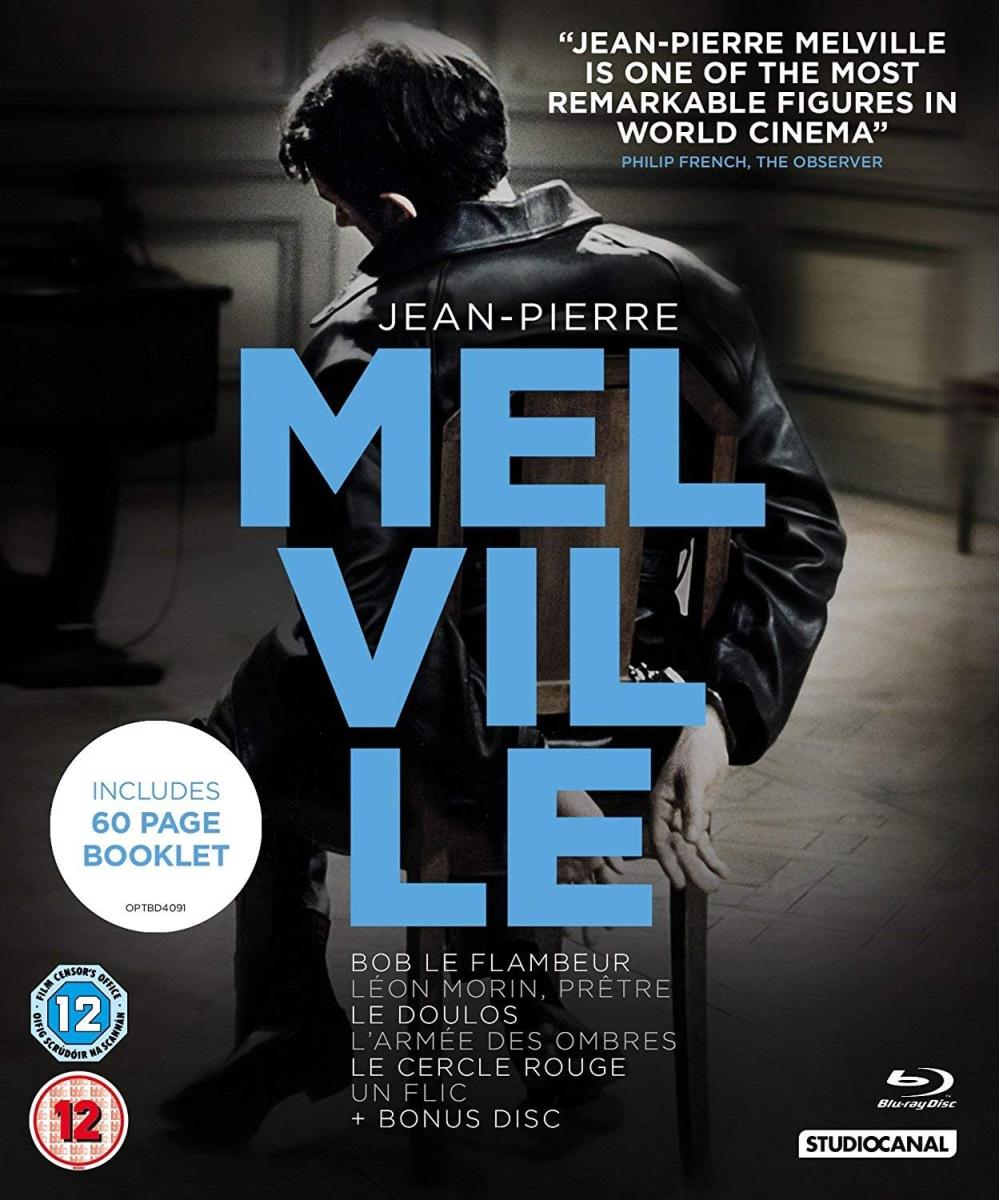
Jean-Pierre Melville
Army of Shadows (1969) | Le Doulos (1962) | Leon Morin, Pretre (1961) | Le Cercle Rouge (1970) | Bob Le Flambeur (1956) | Un Flic (1972)
6 Movie Collection
| Genres: | |
| Subgenres: |
Army of Shadows (1969)
Directed by Jean-Pierre Melville, Army of Shadows depicts the clandestine operations of the French Resistance during WWII with a focus on loyalty, sacrifice, and moral ambiguity. The film blends procedural precision with stark visual minimalism, portraying resistance work as a world of secrecy and inevitable tragedy. Its subdued tone and psychological realism have made it one of the most celebrated wartime dramas in French cinema.
Le Doulos (1962)
Le Doulos, directed by Melville, follows a thief navigating a network of police informants, betrayals, and shifting loyalties. The film blends noir conventions with Melville’s signature existential style, emphasizing ambiguity, terse dialogue, and shadow-heavy compositions. Its complex web of deception and moral conflict has earned it a central place in the French crime canon.
Léon Morin, Priest (Léon Morin, prêtre, 1961)
Directed by Melville, Léon Morin, Priest centers on a young widow in occupied France who forms a charged intellectual and emotional relationship with a charismatic priest. The film blends wartime tension with philosophical dialogue, exploring faith, desire, and ideological conflict. Its restrained performances and psychological clarity highlight Melville’s versatility beyond crime cinema.
Le Cercle Rouge (1970)
Le Cercle Rouge, one of Melville’s defining crime films, follows a newly released convict and a fugitive on the run as they plan a meticulously staged jewelry heist. The film blends minimalist style with fatalistic storytelling, emphasizing discipline, codes of honor, and the inevitability of fate. Its extended, near-silent heist sequence stands as a hallmark of the genre.
Bob le flambeur (1956)
Directed by Melville, Bob le flambeur follows an aging gambler planning one last casino heist amid shifting loyalties and personal decline. The film blends American-inspired noir with French street-level realism, foreshadowing techniques later embraced by the New Wave. Its mix of cool detachment, improvisational energy, and moral weariness established Melville’s early influence on modern crime cinema.
Un Flic (1972)
Un Flic, Melville’s final film, follows a Paris police inspector navigating a series of robberies that entangle him with a criminal he considers a friend. The film blends melancholy precision with sparse dialogue, exploring blurred boundaries between duty and complicity. Its minimalist action sequences and subdued tone reflect Melville’s late-career refinement of the urban noir aesthetic.
| Distributor | StudioCanal |