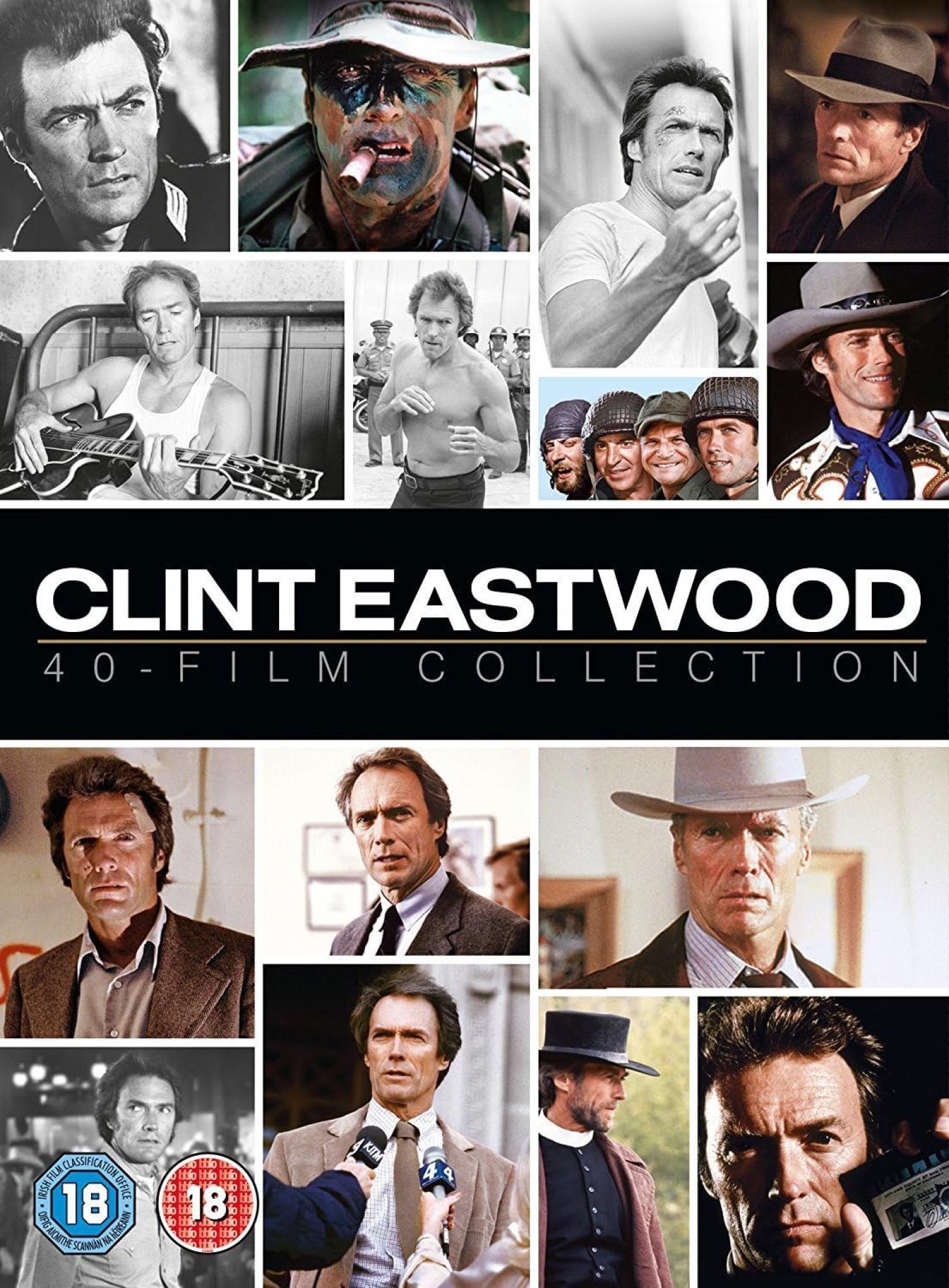
Clint Eastwood
Where Eagles Dare (1968) | Kellys Heroes (1970) | Dirty Harry (1971) | Magnum Force (1973) | The Enforcer (1976) | The Outlaw Josey Wales (1976) | The Gauntlet (1977) | Every Which Way But Loose (1978) | Bronco Billy (1980) | Any Which Way You Can (1980) | Honkytonk Man (1982) | Firefox (1982) | Sudden Impact (1983) | City Heat (1984) | Tightrope (1984) | Pale Rider (1985) | Heartbreak Ridge (1986) | Bird (1988) | The Dead Pool (1988) | Pink Cadillac (1989) | White Hunter, Black Heart (1990) | The Rookie (1990) | Unforgiven (1992) | A Perfect World (1993) | The Bridges of Madison Country (1995) | Absolute Power (1997) | Midnight in the Garden of Good and Evil (1997) | True Crime (1999) | Space Cowboys (2000) | Blood Work (2002) | Mystic River (2003) | Flags of Our Fathers (2006) | Letters from Iwo Jima (2006) | Gran Torino (2008) | Invictus (2009) | Hereafter (2010) | J. Edgar (2011) | American Sniper (2014) | Jersey Boys (2014) | Sully (2016)
40 Movie Collection
| Genres: |
Where Eagles Dare (1968)
Directed by Brian G. Hutton, Where Eagles Dare follows an Allied commando team sent on a covert rescue mission inside a heavily fortified German mountain stronghold. The film blends espionage, misdirection, and large-scale combat, showcasing Alistair MacLean’s intricate plotting and the dynamic pairing of Richard Burton and Clint Eastwood. Its emphasis on infiltration tactics and shifting loyalties made it a standout in late-1960s war adventure cinema.
Kelly’s Heroes (1970)
Kelly’s Heroes, directed by Brian G. Hutton, mixes wartime action with offbeat humor as a group of American soldiers attempts a behind-the-lines heist during World War II. The film’s ensemble—led by Clint Eastwood, Telly Savalas, and Donald Sutherland—anchors a story that fuses anti-establishment satire with caper-film structure. Its blend of irreverence and battlefield spectacle makes it a distinctive entry in the era’s war-movie landscape.
Dirty Harry (1971)
Directed by Don Siegel, Dirty Harry introduces Inspector Harry Callahan as he pursues a sniper terrorizing San Francisco. The film’s tight structure and moral tension revolve around the limits of police authority, personal judgment, and public safety. Its iconic imagery and Eastwood’s performance helped define the modern American urban crime thriller.
Magnum Force (1973)
Magnum Force, directed by Ted Post, follows Harry Callahan as he uncovers a group of vigilante officers executing criminals outside the justice system. The film reflects early-1970s anxieties about corruption and institutional overreach while expanding Callahan’s character through conflicts within law enforcement. Its combination of procedural elements and moral ambiguity deepens the series’ thematic foundation.
The Enforcer (1976)
Directed by James Fargo, The Enforcer partners Harry Callahan with Inspector Kate Moore as they confront a militant urban crime group. The film incorporates commentary on departmental politics, gender integration, and shifting expectations within policing. Its blend of street-level action and evolving character dynamics marks a transitional moment in the Dirty Harry cycle.
The Outlaw Josey Wales (1976)
The Outlaw Josey Wales, directed by and starring Clint Eastwood, follows a Missouri farmer turned reluctant outlaw after the Civil War as he forms an unlikely community while evading government pursuit. The film blends violence with themes of reconciliation, survival, and chosen family, reframing the Western hero as a figure seeking peace rather than dominance. Often cited among Eastwood’s finest works, it helped define his emerging directorial identity.
The Gauntlet (1977)
Directed by Clint Eastwood, The Gauntlet follows a down-on-his-luck Phoenix police officer tasked with escorting a key witness across the country while corrupt forces attempt to stop them. The film blends road-movie momentum with escalating set pieces, emphasizing institutional rot and personal resolve. Its controlled chaos, stunt-driven action, and Eastwood–Sondra Locke pairing give it a distinctive late-1970s thriller energy.
Every Which Way But Loose (1978)
Every Which Way But Loose, directed by James Fargo, pairs Clint Eastwood with an orangutan named Clyde in a cross-country story mixing brawler culture, country-western atmosphere, and offbeat comedy. The film follows a laid-back trucker and bare-knuckle fighter navigating romantic pursuit and a series of eccentric run-ins. Its unusual genre blend and relaxed tone made it one of Eastwood’s most unexpected box-office successes.
Bronco Billy (1980)
Directed by and starring Clint Eastwood, Bronco Billy centers on the leader of a struggling Wild West show whose idealism contrasts sharply with the modern world. The film mixes gentle comedy with themes of reinvention, community, and the endurance of American mythmaking. Its warm, character-focused approach highlights Eastwood’s interest in stories about found families and fading frontiers.
Any Which Way You Can (1980)
A sequel to Every Which Way But Loose, Any Which Way You Can follows the same easygoing mix of fistfighting, romance, and comic misadventure, again pairing Eastwood with Clyde. Directed by Buddy Van Horn, the film expands the first entry’s blend of rural Americana, barroom encounters, and good-natured brawling. Its tone remains rooted in lighthearted populism and 1980s entertainment sensibilities.
Honkytonk Man (1982)
Honkytonk Man, directed by and starring Clint Eastwood, follows a Depression-era country musician traveling to Nashville with his young nephew in hopes of making one last recording. The film combines road-movie structure with themes of artistic longing, illness, and generational connection. Its modest scale and reflective tone showcase Eastwood’s interest in understated, character-driven storytelling.
Firefox (1982)
Directed by and starring Eastwood, Firefox centers on a former pilot recruited to steal a cutting-edge Soviet fighter jet with thought-controlled weaponry. The film mixes Cold War espionage with airborne action, emphasizing high-tech tension and infiltration under political pressure. Its blend of procedural detail and early visual effects reflects the era’s fascination with military technology and geopolitical strategy.
Sudden Impact (1983)
Directed by Clint Eastwood, Sudden Impact follows Harry Callahan as he becomes entangled in a case involving a vigilante avenger targeting her past attackers. The film blends crime-thriller momentum with a darker emotional undercurrent, exploring trauma, retribution, and moral extremity. Known for its stark atmosphere and iconic lines, it repositions the Dirty Harry series within early-1980s genre sensibilities.
City Heat (1984)
City Heat, directed by Richard Benjamin, pairs Clint Eastwood and Burt Reynolds in a 1930s Kansas City crime comedy involving rival lawmen, mob factions, and double-crosses. The film blends period style with light gangster intrigue, relying on the contrast between its two leads’ screen personas. Its mix of vintage noir elements and comedic timing creates a stylized take on Prohibition-era crime.
Tightrope (1984)
Directed by Richard Tuggle and produced by Eastwood, Tightrope follows a New Orleans detective investigating a series of murders that force him to confront his own vulnerabilities and darker impulses. The film leans into psychological tension, sexual undercurrents, and atmospheric urban decay. Its introspective approach marks one of Eastwood’s more character-driven crime thrillers of the 1980s.
Pale Rider (1985)
Directed by and starring Clint Eastwood, Pale Rider reinterprets the mysterious stranger archetype as a preacher who arrives in a mining town threatened by corporate force. The film blends spiritual ambiguity with themes of justice, community, and frontier exploitation. Its restrained pace and mythic framing connect it to Eastwood’s interest in revisionist Western storytelling.
Heartbreak Ridge (1986)
Heartbreak Ridge, directed by Eastwood, centers on a hardened Marine Gunnery Sergeant tasked with training an undisciplined platoon ahead of the U.S. invasion of Grenada. Mixing military discipline, humor, and character friction, the film reflects on leadership, generational change, and personal redemption. It stands as a late-Cold War service drama grounded in Eastwood’s gruff authority.
Bird (1988)
Directed by Clint Eastwood, Bird is a biographical drama about jazz saxophonist Charlie Parker, blending non-linear structure with atmospheric, night-driven imagery. The film examines Parker’s genius, struggles with addiction, and relationships within the jazz community, emphasizing mood and musical immersion over conventional biopic pacing. Its reverent approach highlights Eastwood’s long-standing connection to jazz and artistic legacy.
The Dead Pool (1988)
Directed by Buddy Van Horn, The Dead Pool returns Harry Callahan to San Francisco as he investigates a series of murders linked to a celebrity “death list.” The film blends media satire with procedural action, highlighting shifting cultural attitudes toward fame and sensationalism. As the final entry in the Dirty Harry series, it reflects late-1980s crime-thriller trends and the character’s enduring abrasive resolve.
Pink Cadillac (1989)
Pink Cadillac, directed by Buddy Van Horn, follows a skip-tracer pursuing a woman on the run after becoming entangled with extremist groups. Combining chase dynamics, romantic beats, and light comedic elements, the film shifts between Americana road adventure and crime-tinged pursuit. Its tone reflects Eastwood’s late-80s interest in mixing genre conventions with character-centered charm.
White Hunter, Black Heart (1990)
Directed by and starring Clint Eastwood, White Hunter, Black Heart loosely adapts Peter Viertel’s account of the making of The African Queen and centers on a filmmaker whose obsession with big-game hunting overshadows his professional duties. The film examines ego, artistic conflict, and moral blindness, offering a sharp character study inspired by real Hollywood history. Its introspective approach positions it among Eastwood’s most self-reflective works.
The Rookie (1990)
Directed by Clint Eastwood, The Rookie pairs a veteran detective with an inexperienced partner during an investigation into a luxury-car theft ring. Mixing buddy-cop dynamics with high-energy action, the film contrasts generational approaches to policing and personal responsibility. Its tone aligns with early-1990s action cinema, emphasizing stunts, momentum, and stylized antagonists.
Unforgiven (1992)
Unforgiven, directed by and starring Clint Eastwood, revisits the Western with a stark, revisionist lens as a retired gunslinger returns to violence for one last job. The film interrogates mythmaking, morality, aging, and the consequences of frontier brutality, challenging the glamorized codes of earlier Westerns. Widely regarded as one of Eastwood’s masterpieces, it redefined the genre for contemporary audiences and won multiple Academy Awards, including Best Picture.
A Perfect World (1993)
Directed by Clint Eastwood, A Perfect World follows an escaped convict who forms an unexpected bond with a kidnapped boy as a Texas Ranger leads the pursuit. The film blends road-movie introspection with meditations on childhood, trauma, and the longing for stability. Its tonal balance between tension and empathy highlights Eastwood’s evolving directorial focus in the 1990s.
The Bridges of Madison County (1995)
Directed by Clint Eastwood, The Bridges of Madison County adapts Robert James Waller’s novel about a brief, transformative romance between an Iowa homemaker and a traveling photographer. The film emphasizes intimacy, memory, and unspoken longing through restrained performances by Eastwood and Meryl Streep. Its reflective style and emotional precision helped establish it as a key modern romantic drama.
Absolute Power (1997)
Absolute Power, directed by and starring Clint Eastwood, follows a master thief who inadvertently witnesses a violent incident involving the U.S. President and becomes the target of a political cover-up. The film blends crime-thriller structure with themes of corruption, surveillance, and moral compromise. Its emphasis on institutional secrecy reflects late-1990s political anxieties.
Midnight in the Garden of Good and Evil (1997)
Directed by Clint Eastwood and adapted from John Berendt’s nonfiction bestseller, Midnight in the Garden of Good and Evil explores a Savannah murder case through a journalist’s immersion in the city’s eccentric social circles. The film balances courtroom intrigue with atmospheric portraiture, focusing on place, personality, and Southern Gothic nuance. Its slow-burn structure foregrounds mood over conventional procedural pacing.
True Crime (1999)
True Crime, directed by Eastwood, follows a journalist racing to re-examine a death-row case in the final hours before execution. The film blends investigative urgency with themes of redemption, flawed judgment, and institutional blind spots. Its real-time structure enhances the tension while spotlighting character-driven journalism.
Space Cowboys (2000)
Directed by and starring Clint Eastwood, Space Cowboys follows a group of retired test pilots recruited for a last-chance NASA mission tied to obsolete Cold War technology. The film blends adventure, engineering detail, and generational reflection, emphasizing camaraderie and the persistence of expertise. Its mix of humor and technical spectacle gives it a distinctive late-career ensemble tone.
Blood Work (2002)
Blood Work, directed by Eastwood, centers on a retired FBI profiler recovering from a heart transplant who becomes involved in investigating the murder that made his surgery possible. The film blends procedural investigation with themes of mortality, obligation, and physical vulnerability. Its measured pacing and character focus reflect Eastwood’s increasingly introspective approach to thrillers.
Mystic River (2003)
Directed by Clint Eastwood and adapted from Dennis Lehane’s novel, Mystic River follows three childhood friends whose lives collide again after a family tragedy. The film weaves trauma, guilt, and community silence into a tightly constructed crime drama set in working-class Boston. Its performances and structural precision made it one of Eastwood’s most acclaimed contemporary dramas.
Flags of Our Fathers (2006)
Flags of Our Fathers, directed by Clint Eastwood, examines the lives of the U.S. Marines photographed raising the flag on Iwo Jima and the government’s use of the image to support wartime fundraising. The film contrasts battlefield experience with home-front mythmaking, exploring memory, propaganda, and the burden of symbolic heroism. It serves as one half of Eastwood’s dual Iwo Jima project.
Letters from Iwo Jima (2006)
Released as a companion to Flags of Our Fathers, Letters from Iwo Jima tells the Battle of Iwo Jima from the Japanese perspective, drawing on personal letters and historical testimony. Directed by Eastwood, the film emphasizes humanity, cultural duty, and the intimate cost of war. Its restrained tone and empathetic approach earned it recognition as one of the strongest modern anti-war narratives.
Gran Torino (2008)
Gran Torino, directed by and starring Clint Eastwood, follows a Korean War veteran whose interactions with his Hmong neighbors challenge long-held prejudices and personal isolation. The film blends neighborhood drama with themes of generational change, redemption, and the search for moral purpose. Its grounded tone and character-driven focus made it a major late-career success for Eastwood.
Invictus (2009)
Directed by Eastwood, Invictus depicts Nelson Mandela’s use of the 1995 Rugby World Cup as a tool for national unity in post-apartheid South Africa. The film blends political biography with sports drama, focusing on leadership, reconciliation, and symbolic nation-building. Its emphasis on dialogue and historical interplay provides a measured portrait of a pivotal moment.
Hereafter (2010)
Hereafter, directed by Clint Eastwood, interweaves three stories connected by questions about mortality and near-death experiences. The film blends supernatural drama with grounded human observation, examining grief, empathy, and the search for meaning. Its reflective tone marks one of Eastwood’s most contemplative works of the 2010s.
J. Edgar (2011)
Directed by Clint Eastwood, J. Edgar traces the long career of FBI director J. Edgar Hoover, portraying his influence on American law enforcement and his deeply private personal life. The film blends political biography with psychological study, using a nonlinear structure to explore legacy, secrecy, and self-mythology. Its restrained visual style and focus on character interiority frame Hoover’s power as both formative and fraught.
American Sniper (2014)
American Sniper, directed by Eastwood and based on Chris Kyle’s autobiography, follows the Navy SEAL marksman through multiple tours in Iraq and the challenges of readjusting to domestic life. The film examines the tension between military service, personal identity, and the emotional toll of prolonged conflict. Its grounded approach and emphasis on psychological strain highlight the human impact of modern warfare.
Jersey Boys (2014)
Directed by Clint Eastwood and adapted from the stage musical, Jersey Boys recounts the rise of The Four Seasons through intertwined personal and professional histories. The film blends musical performance with dramatic biography, focusing on loyalty, creative ambition, and the pressures of success. Its straightforward, character-focused approach adapts the show’s narrative structure for a more intimate cinematic tone.
Sully (2016)
Sully, directed by Eastwood, dramatizes the 2009 “Miracle on the Hudson,” following Captain Chesley Sullenberger through the emergency landing and the subsequent investigation. The film balances procedural detail with themes of professionalism, memory, and public scrutiny. Its emphasis on calm expertise and reconstructed perspective underscores the event’s technical and emotional complexity.
| Distributor | Warner Bros |